
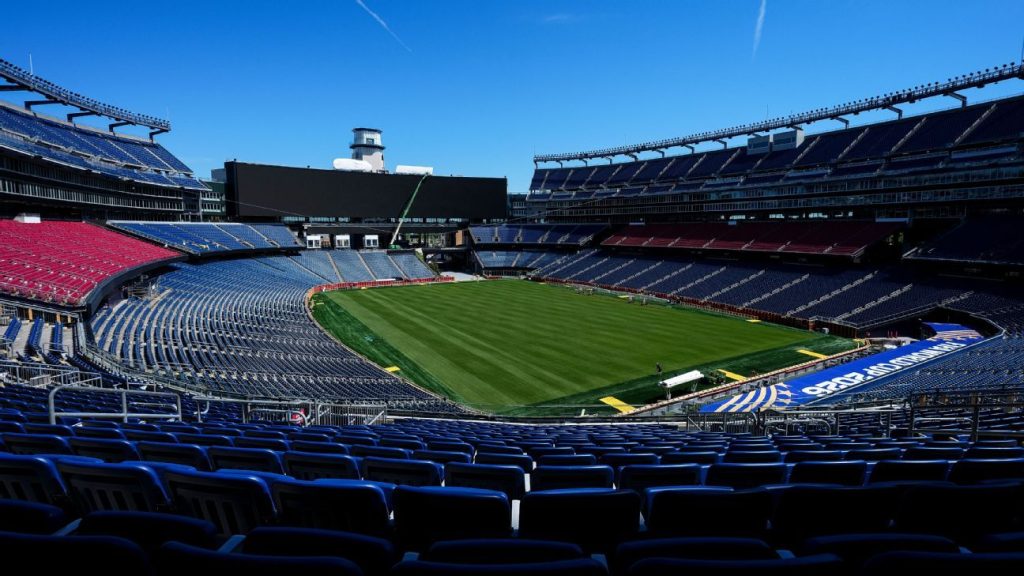
World Cup 2026 is the first tournament where the majority of venues are purpose‑built for another sport, then temporarily reshaped for elite football. Eleven of the sixteen stadiums are NFL homes that have had to swap artificial turf for natural grass, adjust pitch layouts and rethink operational routines, creating a set of environments where you can literally see the engineering compromises in every sprint, press and shot during the tournament. Understanding how those conversions work helps you judge whether what you are seeing on screen reflects true tactical quality or the specific quirks of a former gridiron stage.
Why NFL‑To‑World‑Cup Conversions Matter For Performance Analysis
FIFA’s decision to use existing NFL venues in Atlanta, Dallas, Houston, Seattle, New York New Jersey, Boston, Miami, Kansas City, Philadelphia, San Francisco Bay Area and Los Angeles significantly reduced new‑build costs, but pushed the football problem onto the grass and geometry. All of these stadiums were designed around a narrower, shorter American football field and, in many cases, a permanent turf system, so bringing them up to World Cup standard has required major works: turf removal, sub‑base restructuring, temporary grass fields grown off‑site and careful re‑marking of sightlines and camera positions. For viewers, those engineering choices affect how fast the ball moves, how comfortable players feel when cutting at full speed, and even how easy it is to read tactical spacing from the broadcast angle.
How Turf‑To‑Grass Projects Alter Ball Speed And Player Confidence
In most converted NFL venues, the core intervention has been to remove or cover the artificial turf and install a near‑uniform, FIFA‑approved natural grass surface. Across the U.S. hosts, sod farms in places like Colorado, Moses Lake and other cool‑season regions have grown hybrid blends—often dominated by Kentucky bluegrass and perennial ryegrass—that are cut into large sections, refrigerated and laid over new drainage and root‑zone systems inside stadiums that normally house synthetic fields. On screen, this shows up as a surface where ground passes stay lower and more predictable than on old‑style turf, first touches under pressure tell you more about technical quality than bounce, and defenders are likelier to commit into full‑weight challenges because they trust the grass to grip rather than skid.
Roofs, Bowls And Broadcast Angles: How Stadium Geometry Changes What You See
NFL stadiums were built to frame an American football rectangle and to keep fans close to a narrower field, so their bowls, stands and camera decks are not always ideal for a 105m by 68m football pitch. In retractable‑roof venues such as Dallas Stadium, Atlanta Stadium, Houston Stadium and BC Place, the roof structures and halo boards also influence how sound and light behave, with closed roofs trapping noise and eliminating wind while giant video rings draw eyes upward between phases. When you watch a converted stadium, pay attention to how deep the lower tiers feel, how steep the stands are and how the main broadcast camera sits relative to the halfway line, because those geometry choices change how easy it is to read a team’s vertical compactness, pressing height and spacing between lines in real time.
Why Watching Full Matches Live Is Essential In Converted Stadiums
Because so many of the 2026 venues share NFL origins, one of the best ways to appreciate their differences is to watch full matches rather than just curated highlights. When you follow a game from kick‑off to final whistle, you can see how an attack that looks slick in one converted stadium suddenly feels slower in another, how pressing intensity ebbs and flows as players test their footing on newly laid grass, and how the absence or presence of a roof changes both sound and ball flight over ninety minutes. As you commit to ดูบอลสด repeatedly across the different NFL‑derived venues, you start to build a library of “stadium signatures”: Dallas’s stable indoor‑like diagonals, Seattle’s noise‑driven pressing surges, Atlanta’s wind‑free passing circuits, or Miami’s late‑game fatigue under humid skies.
Key Converted NFL Stadiums And Their On‑Pitch Profiles
While each former gridiron arena has its own quirks, a few broad patterns emerge when you look at the conversion work across the United States. Retractable‑roof venues with new grass, like Dallas, Atlanta, Houston and BC Place, offer some of the most technically friendly conditions in the tournament, whereas open stadiums in hotter or more humid markets, like Miami and Kansas City, still challenge endurance even after turf upgrades. The following list highlights several of the most prominent conversions and what you should watch for when matches from each appear on the schedule.
- Dallas Stadium (AT&T): turf removed for natural grass and roof used to block wind, producing stable ball flight and encouraging long diagonal switches from full‑backs and centre‑backs in possession‑heavy teams.
- Atlanta Stadium (Mercedes‑Benz): new grass laid under a permanently closed “camera‑aperture” roof, creating an indoor‑like bowl where technical security and structured pressing are magnified, especially in knockout games.
- Houston Stadium (NRG): retractable roof and temporary grass field installed in a city flagged for some of the highest heat‑stress risk at the tournament, making rotation and in‑game energy conservation key when you evaluate performances.
- Seattle Stadium (Lumen Field): long‑time turf fortress transformed with a natural grass overlay supplied by a Washington sod farm, keeping its famously steep, noisy stands but changing how the ball rolls and how confidently players slide or cut.
- Boston Stadium (Gillette) and Philadelphia Stadium (Lincoln Financial): open NFL bowls where grass has replaced turf, offering cooler northern conditions that often display teams’ “true” pressing and passing structures with fewer environmental distortions.
After each game, comparing what you saw live with xG, passes under pressure and pressing metrics from these stadiums helps you separate tactical quality from conversion context. A side struggling to combine in Atlanta, on pristine grass and without wind, probably has structural or technical issues, while a team fading in Houston or Miami may be dealing primarily with cumulative heat and humidity layered on top of a still‑new playing surface.
Table: Converted NFL Stadiums And Their Tactical Implications
Summarising the main converted NFL venues in a table clarifies how the engineering changes translate into what you should look for when you watch matches from each ground.
| Stadium (World Cup name) | NFL origin & conversion | Roof / climate context | Tactical implication when watching live |
| Dallas Stadium | AT&T; turf to natural grass overlay | Retractable roof; warm Texas conditions | Stable passing, accurate diagonals, sustained pressing possible |
| Atlanta Stadium | Mercedes‑Benz; new grass over former turf | Closed retractable roof; hot, humid city | Wind‑free bowl; ball circulation and xG patterns highly revealing |
| Houston Stadium | NRG; turf replaced for World Cup | Retractable roof; high heat‑risk host | Energy management critical; watch rotation and tempo shifts |
| Seattle Stadium | Lumen Field; turf converted to grass | Open with partial cover; mild NW summer | Loud atmosphere; pressing waves and momentum swings amplified |
| Boston Stadium | Gillette; grass pitch installed over NFL base | Open, cooler New England climate | Fewer excuses; pressing and build‑up reflect pure tactics |
| Philadelphia Stadium | Lincoln Financial; existing grass tuned to FIFA spec | Open, moderate East Coast weather | Balanced conditions; good reference for comparing styles |
| San Francisco Bay Stadium | Levi’s; grass in dry coastal California air | Open, low humidity | Firm surface suits quick transitions and wide attacks |
| Los Angeles Stadium | SoFi; turf replaced with hybrid grass patches | Covered indoor‑outdoor bowl; temperate climate | Very stable ball flight; vertical, technical football encouraged |
Reading this table alongside full‑match broadcasts gives you a practical checklist for each venue. In roofed, converted NFL stadiums, focus on how bravely centre‑backs pass through pressure and how often teams attempt high‑risk switches, because the environment favours precision; in open, hotter conversions, track whether sides adjust their pressing and substitution patterns to cope with invisible heat‑stress factors layered onto a still‑settling pitch.
Summary
The World Cup 2026 story is not only about tactics and players; it is also about how eleven former NFL stadiums have been remade, temporarily, into elite ลิ้งค์ดูบอล ช้าง venues with new grass, tweaked sightlines and, in several cases, closed roofs. By understanding those conversions and watching full matches with attention to ball behaviour, pressing intensity and chance quality, you can interpret performances from these hybrid arenas with far more nuance than if you treated them as interchangeable neutral grounds. That stadium‑aware view turns each ex‑gridiron venue into a live laboratory for how engineering and environment shape the modern game on its biggest stage.