
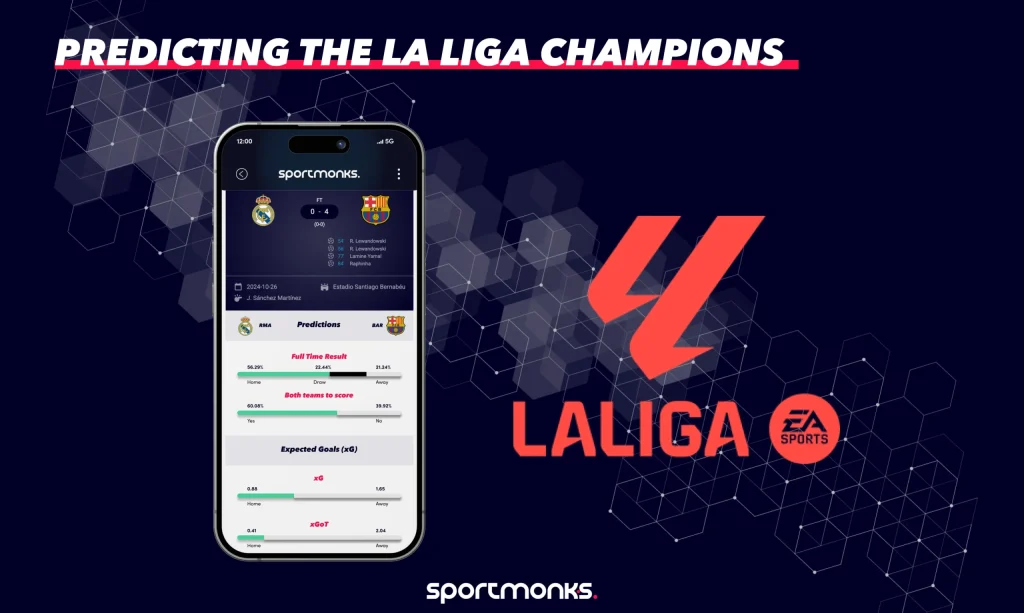
When you add a stats app to your La Liga 2023/24 routine, you move from guessing based on form tables to reading matches through numbers on shots, chance quality, and tactical tendencies. By learning which metrics matter, where they mislead, and how to connect them directly to the markets you bet, a simple app becomes a decision tool rather than just another source of noise.
What a Stats App Can Actually Add to Your La Liga Decisions
The core benefit of using a stats app is that it exposes patterns you cannot reliably track in your head—shot volumes, xG trends, defensive pressure, and goal timing—across 38 matchdays. When these numbers are read before betting rather than after, they help you test your first impressions of a fixture against evidence, which often prevents emotional bets driven by recent scorelines alone. Over a full 2023/24 season, this shift from intuition to structured checks typically cuts out some of the worst wagers, even if it does not guarantee profit on every individual match.
Choosing Metrics That Matter for Pre-Match Analysis
Stats apps throw dozens of numbers at you, but only a handful consistently link to how La Liga matches play out for bettors. Prioritising expected goals, shot counts, possession with field position, and set-piece data gives you a clearer view of how teams create and concede danger, rather than just how often they win. When you combine those core metrics with context—home or away, schedule congestion, and recent opponent strength—you turn raw figures into a more realistic picture of what the next game’s flow is likely to look like.
Building a Pre-Match Checklist Inside Your App Workflow
Instead of scrolling aimlessly through graphs and tables, you gain more by following a repeatable sequence of checks each time you study a La Liga game. That checklist should cover attacking output, defensive stability, style matchups, and recent anomalies, always with one eye on how these patterns translate into specific markets you might consider. By making this process consistent from week to week, your pre-match analysis becomes more comparable across fixtures, which makes it easier to see whether the app is actually improving your decision quality.
- Long-term xG for and against for both teams, over at least the last 8–10 matches.
- Shot volume and shots on target, split by home and away performances.
- Goal timing patterns, such as frequent early goals or late collapses.
- Set-piece stats (corners won, goals from set plays, conceded chances).
- Disciplinary trends, including cards and fouls that affect game rhythm.
- Recent schedule intensity and travel that might influence fatigue.
Once you start applying this list consistently, patterns appear in how certain La Liga 2023/24 teams behave that go beyond league position or headline results. You may find a side that looks strong in the table but concedes a high xG, or another that creates chances steadily yet sits lower in the standings because of finishing slumps, and those discrepancies often point to spots where odds markets lag behind the underlying data. The aim is not to force a bet whenever you see a stat, but to let the checklist either confirm, challenge, or block your initial lean before any money is staked.
Connecting App Data Directly to Specific Market Types
The value of a stats app multiplies when you tie particular metrics to the markets you are considering instead of treating all numbers as general background information. For match-winner or handicap bets, you might focus more on overall xG balance, defensive solidity, and performance against similar opponents in La Liga 2023/24, while goals markets depend more on shot frequency, chance quality, and game tempo indicators. When you line up app data with the exact bet type, it becomes easier to see whether the odds on offer reflect reality or whether they are anchored more in reputation and recent scorelines.
How Different Metrics Drive Different Betting Choices
In practical terms, teams with consistently high xG for and against, coupled with high shot numbers, are stronger candidates for over goals or both teams to score than for low-scoring unders, even when their most recent scoreline was 1–0. Conversely, sides that allow very few shots but also fail to create much themselves tend to generate better opportunities for unders or narrow handicap plays than for speculative overs, regardless of a single high-scoring outlier. Recognising these links inside the stats app shifts your thinking from “this team scores a lot” to “this profile of attack and defence supports this specific market at these odds,” which is a more durable pre-match habit.
Using Operator Data and App Stats Together Without Losing Objectivity
Many bettors end up checking both their stats app and the data inside their betting accounts, and the way these sources interact can either sharpen or blur judgement. When you study La Liga 2023/24 matches inside a betting destination such as ufa168 เครดิตฟรี 100, you see odds movements, popular markets, and historical settlement data alongside your pending or past tickets, but not always the deeper context behind each match-up. If you instead start from the independent app, form a provisional view based on xG, shots, and style, and only then cross-check prices and available markets in the betting account, you reduce the risk that interface design or trending bets will override the more solid evidence you collected first.
Comparing Two Fixtures Using a Simple App-Based Framework
A stats app becomes particularly useful when you need to choose between several possible La Liga bets on the same weekend. Rather than going purely on gut feeling, you can line up key metrics for each candidate match in a small comparison framework and see which one offers cleaner alignment between data, price, and your preferred market type. This approach helps you narrow focus to a few fixtures where your edge appears strongest, instead of spreading stakes thinly across many weak ideas.
| Fixture | Attacking Profile (xG & shots) | Defensive Profile (xGA & shots conceded) | Style Matchup Risk | Market That Fits Best |
| Match A | High, sustained | Moderate, some open games | Both teams open | Over goals / BTTS |
| Match B | Moderate, inconsistent | Strong, low xGA | Cagey, tactical | Unders / narrow AH |
| Match C | Low, direct | Weak, many chances conceded | One-sided pressure | Favourite -1 AH |
Looking at matches through this kind of table, built from app data, makes it clearer which fixture actually suits your betting style and where the stats suggest a realistic edge. You may decide to ignore a game with flashy headlines if the numbers expose high uncertainty, and instead back a quieter fixture where attacking and defensive metrics point in a more coherent direction, reinforcing the idea that the app is there to filter, not to justify, your initial excitement.
Avoiding Common Traps When Using Stats Apps
The most frequent mistake with stats apps is to chase patterns that appear significant but rest on tiny samples or highly specific game states. A small run of high xG or big shot counts against weak opposition early in La Liga 2023/24 might inflate your opinion of a team that struggles when facing stronger or more tactically disciplined sides later in the season. By checking sample size, opponent quality, and whether recent numbers came from red-card or penalty-heavy matches, you prevent temporary spikes in the data from driving large pre-match positions that lack real long-term backing.
Keeping App-Based Analysis Separate From Non-Football Gambling
Because many bettors handle all their activity from the same device, there is a risk that the discipline developed in your La Liga stats routine gets muddled with unrelated high-variance products. Even when everything appears together under one account or payment method, the behaviour of randomised games does not improve simply because you have a strong view on xG or shot maps. If you lump those wagers emotionally under the same heading as casino online, you may unknowingly attribute part of your football results—good or bad—to fluctuations that have nothing to do with your analysis, which makes it harder to judge whether the app is genuinely improving your decisions.
Summary
Using a stats app for La Liga 2023/24 becomes genuinely valuable when it sits inside a structured pre-match routine rather than acting as a last-minute confirmation tool. By focusing on a handful of meaningful metrics, tying them to specific market types, comparing candidate fixtures systematically, and filtering out small-sample or context-heavy anomalies, you turn scattered numbers into a clearer map of where your betting ideas make sense. The more consistently you apply this approach across the season, the easier it becomes to distinguish between matches where the data supports action and those where the smartest move is to pass.